Bringing Back the Woolly Mammoth

http://www.csmonitor.com/Science/2015/0705/Scientists-edge-closer-to-bringing-back-the-woolly-mammoth

I found this article particularly interesting because of the idea of bringing back a species that is extinct is such an exciting new possibility with modern technology. Pertaining to Wrangel island the article mentions that while most mammoths died off around 10,000 years ago, this  animal was preserved on Wrangel for another 7,300 years! If these Wrangel island woolly mammoths were around 3,700 years ago this means they were most likely still living there at the time period advanced civilizations such as ancient Egypt were flourishing. What this exemplifies is how the progression of time  is slowed down significantly on Wrangel Island, proving the point that stepping onto this island is comparable to stepping back thousands of years into time.

Posted in Uncategorized | Tagged , , , | 5 Comments

The Failed Lost Colony of Roanoke Island

Life in the sixteenth century was horrendous. There were some good points, sure, like Michelangelo’s David sculpture, completed in 1504. Sadly, things went downhill shortly after David’s completion. One of the worst things to happen in the 1500’s, aside from the Dancing Plague of 1518, was the attempted—key word being ‘attempted’—establishment of the first English colony in the Americas, Roanoke.

What was wrong with Roanoke? I think that’s the wrong question. The right question, I feel, is, what was right with Roanoke?

Let’s start with some history. The 1500’s is pretty late to start getting into the whole colony craze, and England knew this. It’s like trying to get into cell-phones in the year 2015 by starting with a Motorola RAZR. At this point in time, the French, the Dutch and the Spanish all had colonies strewn about the Americas. They got the best seats in the house, and England had to choose between nosebleed seats and different-looking nosebleed seats.

Why was England so late?  They were too busy playing footsies with Ireland, trying to annex them together into the Kingdom of Ireland, with King Henry VIII as its figurehead. Now, if you don’t recall, Henry VIII was the guy who, quite possibly, executed every woman he’d ever come into contact with. I’m sure you can see why Ireland wasn’t too keen on having that fun-loving gent as their regal representative.

Fresh off the affair with Ireland—though the hostility between England and Ireland was far from over—Queen Elizabeth I, a less psychotic ruler decided to trust Sir Walter Raleigh to establish a successful colony on the east coast of the Americas. In 1584, Raleigh and some other dudes explored the east coast and found Roanoke Island. There, they made contact with the natives and, surprisingly, didn’t butcher or enslave any of them! I’m sure it took a lot of self-control on behalf of Raleigh, so we should commend him. He did, however, take two Croatoans with him; but it was only so he could better understand the politics and geography of the region. I’m sure he was very nice to those two.

With the help of the two Croatoans, Raleigh got to O.K. to organize a second expedition, this time appointing Sir Richard Grenville as the party leader. On April 9, 1585, The Tiger, the Roebuck, the Red Lion, the Elizabeth and the Dorothy were to establish a colony on Roanoke Island.

The Universe has humorous timing, I feel. While rounding Portugal, a storm blew the ships off course, driving them all off in different directions. The captains of the ships had a contingency plan to meet up in Puerto Rico if they were separated. Sadly, only the Tiger, Grenville’s vessel, reached Puerto Rico to start. Grenville waited patiently, even going so far as to make contact with the resident Spaniards and do privateering for them while he waited. Eventually, the Elizabeth arrived, looking like she just rode through a nasty storm. Grenville was delighted, but soon grew tired of waiting for the rest of the ships. Fun fact: Grenville waited an estimated 15 minutes after the Elizabeth’s arrival before ditching the rest of the ships.

While sailing through the Ocracoke Inlet, the Tiger struck a schoal, wherefore most of the food supplies fell into said schoal. There is good news, however, the sailors repaired the Tiger’s damage and, in July, met up with Roebuck and Dorothy. Roebuck struggled to escape the pull of the ocean’s equivalent of a black hole, the whirlpool and Dorothy had an existential journey through the magical Land of Oz. Red Lion also found its way back to the group when Dorothy and Roebuck found it some weeks previous. The Red Lion basically dropped its passengers off and said, “I can’t handle this anymore,” and fled to do privateering in Newfoundland.

Now, most of the people on these ships were uneducated and were without relevant skills. They had very poor skill sets. They also were not equipped to and had no inclination to start a colony. They wanted to get in, get rich and get out. This, as you can imagine, is a big problem. It’s a shame, too, since Roanoke is actually a pretty fantastic location for a colony. It had fertile soil, good ports, and enough geography to isolate them from the Spanish. Unfortunately, there were no farmers among any of the ships’ crews. These guys were doomed from the start.

Finally, the English arrived. Instead of doing something practical like building camp or a few outposts, what do you think the English do first? Really, take a guess. If you guessed that they go pillaging and destroying stuff, then you’re right! Good on you. I don’t know about you, but if I were in a land I knew nothing about, the last thing I’d be doing is attacking the local populace. I suppose that’s why I’m not ever invited on these kinds of expeditions.

To be fair, the English probably had a very good reason for doing the one thing you’re never supposed to do when first settling a colony, which is angering the natives. Their reason, I think, is pretty sound. The English killed the natives over a silver cup. Yes, a silver cup the natives were accused of stealing. Whether they did steal it or not, sacking and pillaging an entire village is a bit of an overreaction, even if it’s just on the principle.

Off to a great start, Grenville realized they were low on food. He left Ralph Lane and 107 men to establish a colony further north, promising to come back at a later time with more men and fresh supplies.

Grenville promised to return in April of 1586, but he did not. Not to mention the fact that, usually, natives don’t exactly like when you burn and destroy their villages, so bad blood starting pooling between the colonists and the natives. So much so that the natives attacked the colonists! I bet no one saw this coming, not even the natives themselves.

Later, Sir Francis Drake, the legend himself, on his way home from a raid in the Caribbean, stumbled upon Roanoke. Compassionately, he offered to take the men back to England, many of whom accepted. Whoever didn’t was either dead or suffering from dysentery followed by death, so pretty much everyone said yes to this deal.

Shortly after Sir. Freaking Francis Drake showed up like Superman, that Grenville also came back. Finding the colony a basic mess, he returned to England with his force, leaving a small detachment in order to maintain an English presence and to protect Raleigh’s claim of Roanoke Island.

In 1587, on a new expedition to establish a colony on Chesapeake Bay, no trace of the Roanoke colonists was left. They simply vanished. While all that was going on, the natives were completely owning the new wave of colonists, using guerilla warfare to wreck their lives.

It is theorized that the colonists left behind eventually got into a conflict with the natives there. Upon losing, the survivors were indoctrinated into the tribe, thus becoming natives themselves.

Many years later, rumors began spreading through the colonies of seeing fair-skinned natives skipping through the forest. I’m sure to them that was a scary, possibly terrifying, image; but these were the same people who believed in a disease that kills you via dancing. I don’t think we can take much of what they think seriously anyway.

Posted in Uncategorized | 3 Comments

Jan Mayen Island

I found this wonderful video on this isolated Arctic island.


Posted in ice, island, Uncategorized | Comments Off on Jan Mayen Island

Everything You Wanted to Know about Bikini Atoll but Were Too Afraid to Ask

What is Bikini Atoll? That’s a good question. A very long and complicated good question. Bikini Atoll is just one of about 29 atolls and 5 islands that comprise the Marshall Islands, or, as they’d like to be known as, the Republic of Marshall Islands. That republic part is also something drenched in a complicated history I’d rather not get into, so we’ll take their word for it.

Something I bet you’re wondering, and I know you are, is, “What makes Bikini Atoll so special?” Well, I’m not sure your what your definition of special is; but if it, in any way, includes being the guinea pig of numerous nuclear weapons tests, then Bikini Atoll is quite special.

Let’s start with some basic history. 23 nuclear devices took part in the program. Overall, the bombs collectively netted a yield of 42.2 Mt of explosive stuff. If you cannot comprehend the scope of 42.2 Mt of explosive stuff, just think of it as a really not fun thing.

The first actual missiles used were part of the Operation Crossroads operation. While Operation Crossroads does sound like a fun name for a scavenger hunt, this hunt was more catastrophic than even the most boring of scavenger hunts. Un-fun fact: these bombs were, at the time, the first detonations of nuclear devices since the Nagasaki Incident of 1945. The purpose of this test was to see how nuclear weapons affected war ships. That’s the official purpose, though, whereas the real one was probably a more juvenile reason.

The first test, Able, was a disappointment because whoever was flying the bomber plane missed the target point. Now, if that sounds bad, just imagine that guy missing out in the field. “Oh, did I miss the enemy base? Well, what did I hit? A small fishing village!? Those latitudinal lines always did get me, sir!”

Regardless of whether you now fear the competency of the U.S. air force, know that the second test, Baker, hit the target point and was a complete success! Well, a success in that it hit the relative area it was supposed to, but a sort of bittersweet victory in that the sea spray from the blast caused massive contamination, resulting in the possible genocide of pretty much everything living in the general vicinity. Well, at least they hit the right spot, which must count for something.

The U.S. military looked at these two massive “successes” and thought, “Man, we got a pretty good thing going on here. Why don’t we do a third test? What’s the worst that could happen?” The only problem was the target ships were so contaminated that decontaminating them was almost as impossible as the common core AP Calculus exam. I’m about 75% sure that test doesn’t exist, but you can imagine how bad that’d be if it did exist.

This third op, nicknamed Charlie, was relocated and demoted to a deep shot somewhere off the Californian coast in 1955, some 8 or 9 years after the initial Crossroads tests.

There were four-sum sets of tests done to this poor place. There was a strange pattern to them. Bomb a location, see the amount of contamination it does and let your jaw hit the floor as the amount of damage and contamination exceeds your wildest fantasies or, I’d reckon most plausible, vicious nightmares.

Since these guys were almost consistently blown away by the power behind these things, I think it’s safe to say they really had no idea what they were in control of, like a ten year old behind the wheel of a stick-shift.

Let me give you one more example. The castle set included seven tests. Castle Bravo was particularly devastating to the land. Now, the Bravo bomb is considered the biggest nuclear explosion ever detonated by the United States. It’s also, unfortunately, one of the largest cases of accidental contamination ever done by the U.S. in the context of nuclear weapon testing. The U.S. does a lot of contamination, and so radioactive ones must be distinguished as to not make light of all the other garbage we are the cause of.

What made this bomb so devastating was not just the power behind it, but some key factors of a human variety, the first of which being that the fallout landed on the residents on Rongelap and Utirik, two of the atolls that comprise the Marshall Islands. It took three days to evacuate these people; by that time, it was too late, leaving many residents with radiation sickness. Even worse, they were returned to their island some three years later. Their welcome home gift was not a feast or celebration, it was for them to relocated again after the island was found to still be uninhabitable.

Lastly, and this is the worst part, the reason they kept this test a secret is because they didn’t expect the explosion to be so big. The actual yield was 15 Mt. The estimate by the designers? Oh, around 4 or 5 Mt. I don’t know about you, but when I took geography, if I was more than a degree off on either side, I lost credit. These guys mysteriously lost 10 Mt of power. This isn’t like losing 10 cents. This is like dropping 10 million dollars out of your pocket while trying to fish out a membership card at a grocery store.

What could cause such a big clerical error? Well, it’s actually a big error, so calling it clerical is pretty forgiving. In the bomb, the scientists only accounted for one isotope, the lithium-6, being reactive. There was, however, another isotope: lithium-7. This second isotope, assumed inert, comprised 60% of the entire lithium content in the bomb. This is the cause behind the unanticipated force. Now, to be fair, the reasoning behind the lithium-7 reacting is actually quite technical and was easy to miss, especially when talking in a theoretical sense; but still, these calculations went through many hands and the fact that each person missed it is profound.

The people and the ecosystems of Bikini Atoll were forever transformed by these tests. Even to this day, advocacy for the islands is still a hot issue. This is a testament to how man, when in possession of something they truly do not understand, can destroy and hurt so many lives. People were relocated from their homes to islands no humans inhabited, mostly because of how harsh the living conditions on some of the Marshall Islands are. Strangely enough, even after all the research and knowledge gained since that time, we seem to be no more capable of protecting the world from ourselves than we were back then.

To end this post, I would just like to stress that I, in no way, find these events funny. They are horrid monstrosities of human behavior and a true strength in showing the vastness of human ignorance. I only use humor to stress how angry I am with how we’ve treated the people of the Marshall Islands. Here’s another piece of information; think of it as an addendum to this entire discussion.

In 2001,  the Nuclear Claims Tribunal awarded the islanders a total of $563,315,500. Congress, our congress, failed to fund the settlement. The check must have got lost in the mail or something. Instead of doing the humane thing and, I don’t know, swallowing their pride and funding the settlement, when a petition for Congress by the islanders to fund the money reached the Supreme Court, the appeal was turned down. Why? To honor the United States Court of Appeals’ decision not to compel the government to fund the claim. That’s pretty sick, isn’t it? And it still, to this day, makes no sense. We still, to my knowledge, have not honored this valid claim.

I got all this information from the wikipedia page on Bikini Atoll and this site: https://www.bikiniatoll.com/

Some pictures:

The atoll, with large craters in the northwest indicative remains of the Castle tests, specifically Castle Bravo.
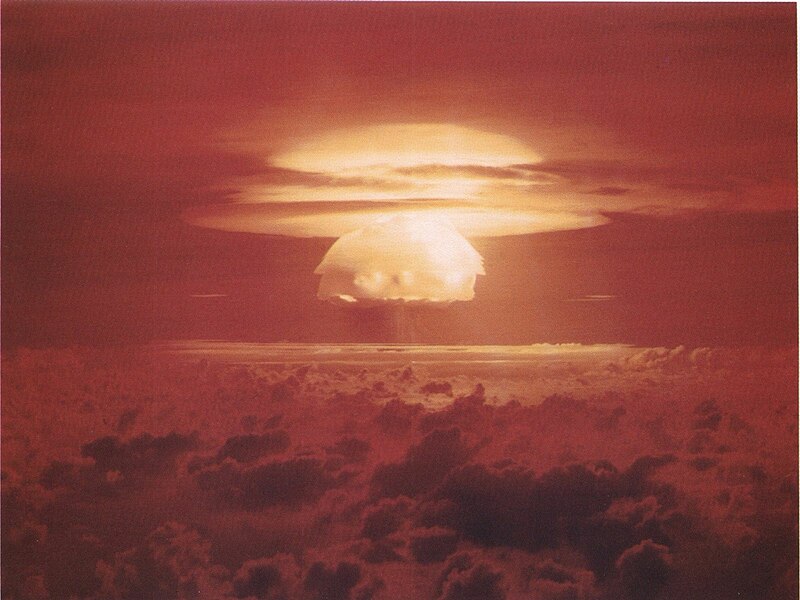
Castle Bravo mushroom cloud: the last thing you want to see outside of your window on a Summer morning.

The Able test.

USS Saratoga sinking after Crossroads test.
Posted in Uncategorized | Tagged , , , , , | 6 Comments

Manhattan island

Manhattan island, not only famous from being the world’s biggest financial center, but also from the 9/11 attack.

This Friday is September 11th. Fourteen years ago, terrorists launched a deadly attack on Manhattan, which cost thousands of people’s lives. All seven of the World Trade Center were destroyed in the incident. Shaken the world.

One of the scariest things for being on an island is that there is no escape. It is even scarier when disasters like that happened. The 500,000 people from the World Trade Center could not escape the island without swimming or being rescued by boats.

I want to share a video with you about a less known story that happened in 9/11. I watched this video two years ago during a 9/11 memorial lecture.  Without these brave people, we will suffer a even more serious loss.


Posted in island | Tagged | 4 Comments

Books Inspired by Islands

Believe it or not, we learn a lot from fictional novels. The facts may not be realistically true, but the emotional lessons are just as strong. Fictional characters can bring a whole new perspective to topics we persistently thought only had a one-way route. They teach us to believe in the impossible and that limits do not exist, only obstacles.

Here are some books I have read that may give further insight on the effects islands have on our lives.

And Then There Were None by Agatha Christie

Island of the Blue Dolphins by Scott O’Dell

Lord of the Flies by William Golding

Posted in island, magical, mysterious, Uncategorized | Tagged , , , , | 4 Comments

Running on Island Time

71y6LLixZdL._SX522_When we go on vacation to islands, we adjust to the lifestyle of the people who live there normally. In most places, we find it necessary to slow ourselves down and relax and take it easy while we have the opportunity to. However, in others we find it necessary to throw ourselves into the fast paced lives the inhabitants of the area are living. Either way, traveling to an island makes us run on “island time”.
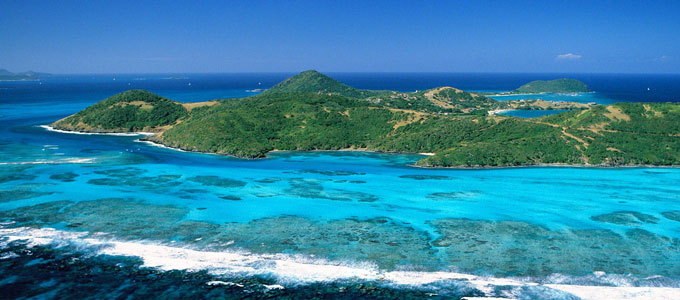

In the words of The Beach Boys, Kokomo is a place where you get there fast and then take it slow. Although Kokomo itself does not truly exist anymore, it is now known as Sandals Cay, the idea of traveling to an island in the Caribbean to take it easy has become a popular  thought amongst many tourists. Many take advantage of this slow lifestyle to open their minds up to various cultural differences they experience on the island, including trying things like dancing, new foods and drinks, and listening to steel drum bands. A relaxing island vacation is ideal for those who feel as though they need to unwind and take life slow for a change.

New York Speed

Many tourists in New York City have to speedup their lifestyle to keep up with the locals.  Johnny Carson once joked about the length of a New York Minute being the amount of time between a traffic light turning green and the person behind you honking your horn at you. From something as simple as how quickly you order your coffee to trying to cross the street, speed is of the essence in Manhattan. There is no slowing down in the middle of a crowd of hundreds of people, as there is no time in the Big City for one person to hold up the rest of the world. Although it is not the typical form of island time, a New York minute will definitely take some adjusting to.

When on an island, one must learn to run on island time, whether you are speeding it up in New York City or taking it slow in Kokomo.

Posted in island, Travel, Uncategorized | Tagged , , , | 1 Comment

Curiosity

IMG_6342As you begin your college career, try to find your inner four year old.  You remember–when you asked “Why?” all the time?  Curiosity is the driving engine of creativity and success.  What are you most curious about?  Go ahead, post a share here.


Posted in Uncategorized | Comments Off on Curiosity

Traveling With An Open Mind – HOLSTEE

While vacations can be a moment to relax and unwind, travel is a time to fully engage, explore and see everything as new, invigorating and possible.

Source: Traveling With An Open Mind – HOLSTEE

Posted in Travel | Comments Off on Traveling With An Open Mind – HOLSTEE

What makes an island an island?

tectonics-pangea-animation

Click on the image to see our continents move!

In a way our entire planet is an island, floating in the Solar System, our galaxy, the universe.  Our continents have drifted around the globe over millions of years, joining and parting as they ended up in the earth we know today.

But in special ways we designate certain land masses as ‘islands.’  We will be exploring a range of small islands, some inhabited by people, others just by birds, plants, insects, and other animals.

Join us as we explore what the concept and reality of island is.

W.C. Turgeon
7/12/15

Posted in island | Comments Off on What makes an island an island?